

Antimony (III) Ethoxide
Properties
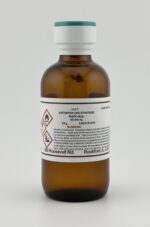
- We can offer items in bulk or custom. For other quantities or purities, please request a quotation.
- All prices are subject to change.
Information about Antimony (III) Ethoxide / CAS 10433-06-4
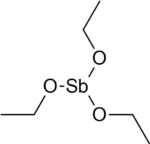
Antimony (III) Ethoxide, or antimony triethoxide, is a clear pale yellow liquid at room temperature. It is moisture-sensitive and combustible. It is used in atomic layer deposition, is an effective catalyst, and has been recently demonstrated to be an efficient flame retardant additive for lithium-ion batteries.
As with many alkoxides, Antimony (III) Ethoxide is suitable for atomic-layer deposition for preparing thin films. For example, when researchers from the University of Dresden combined Antimony Triethoxide with Tris(trimethylsilyl)antimony as a precursor, they were able to prepare high-purity Antimony thin films with higher electrical conductivity than previously reported Antimony thin films prepared by atomic layer deposition.
Antimony (III) Ethoxide has also been used as a catalyst. It was recently used by researchers from Purdue University in the synthesis of siderophore for use with an antibiotic against Bacillus bacteria. The Antimony Ethoxide was able to facilitate the conversion of an ester-amide exchange with a 75% yield.
Recently, Antimony (III) Ethoxide was found to be an effective flame-retardant synergist. Researchers from Anhui University of Technology in Maanshan, China, are working on finding innovative ways of addressing the flammability of the organic electrolytes in Lithium-ion batteries. They incorporated Antimony Ethoxide into the battery electrolyte with the fluorinated flame retardant fluoroethylene carbonate. The researchers found that upon thermal decomposition, the Antimony Ethoxide decomposed into Antimony Oxide (Sb2O3). This catalyzed the defluorination of fluoroethylene carbonate, suppressing combustion and flame propagation. As an added benefit, the Antimony Ethoxide improved the cycling stability of the Lithium-ion cells.
- He, S., Bahrami, A., Zhang, X., Julin, J., Laitinen, M., & Nielsch, K. (2023). Low-temperature ALD of highly conductive antimony films through the reaction of silylamide with alkoxide and alkylamide precursors. Materials Today Chemistry, 32, 101650. https://doi.org/10.1016/J.MTCHEM.2023.101650
- Pandey, R. K., Jarvis, G. G., & Low, P. S. (2012). Efficient synthesis of the siderophore petrobactin via antimony triethoxide mediated coupling. Tetrahedron Letters, 53(13), 1627–1629. https://doi.org/10.1016/J.TETLET.2012.01.074
- Li, L., Ren, K., Yu, Q., Wu, S., Xu, Z., Li, H.-W., Jiang, Z., & Li, Y. (2025). Antimony Ethoxide as a Flame-Retardant Synergist for Enhancing the Safety of Lithium-Ion Batteries. ACS Energy Letters, 4353–4360. https://doi.org/10.1021/ACSENERGYLETT.5C01847
Safety


- H302Harmful if swallowed.
- H226Flammable liquid and vapor.
- H332Harmful if inhaled.
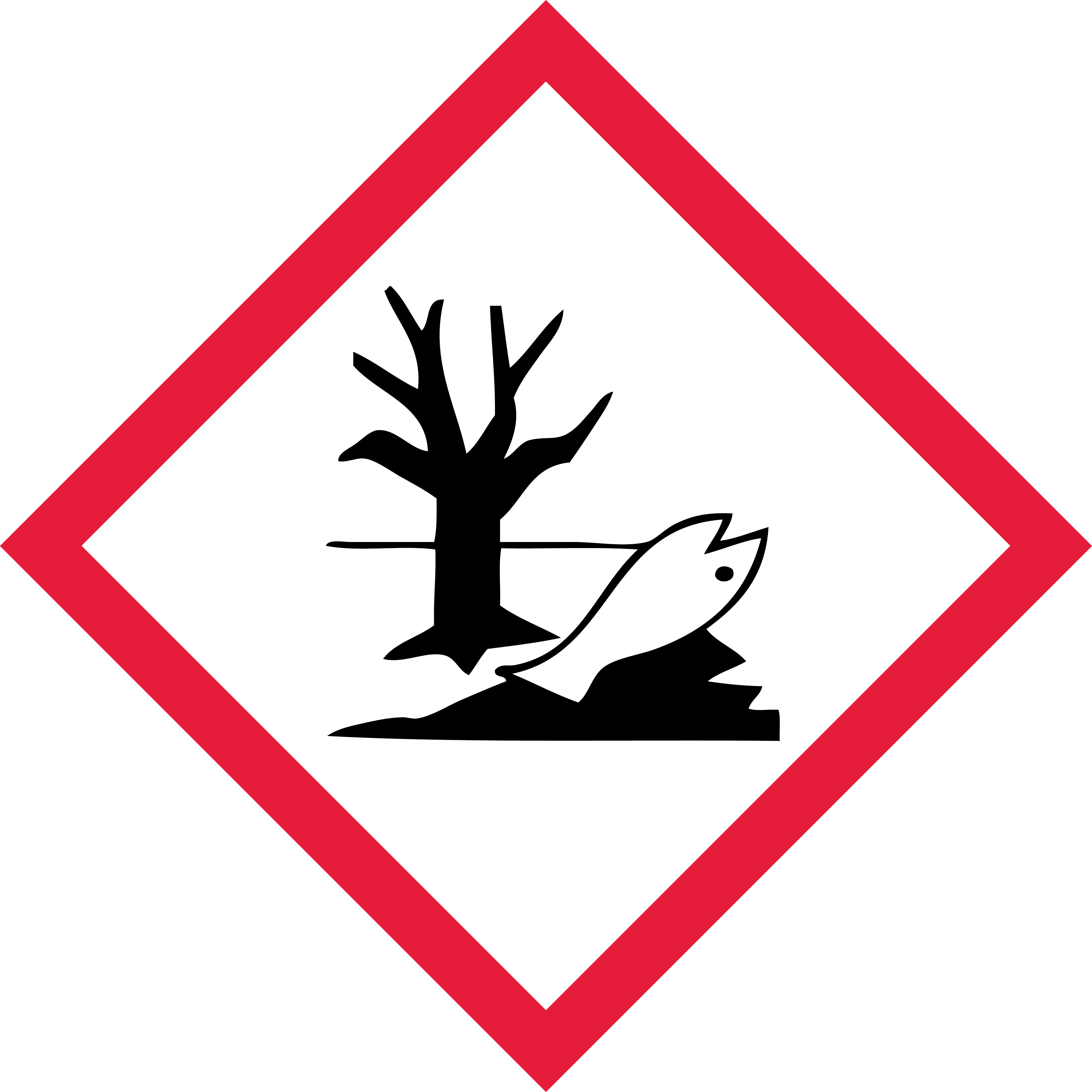
- H411Toxic to aquatic life with long lasting effects.
- P210Keep away from heat/sparks/open flames/hot surfaces. — No smoking.
- P242Use only non-sparking tools.
- P243Take precautionary measures against static discharge.
- P270Do not eat, drink or smoke when using this product.
- P273Avoid release to the environment.
- P280Wear protective gloves/protective clothing/eye protection/face protection.
- P301+P312IF SWALLOWED: call a POISON CENTER or doctor/physician IF you feel unwell.
- P303+P361+P353IF ON SKIN (or hair): Remove/Take off Immediately all contaminated clothing. Rinse SKIN with water/shower.
- P370+P378In case of fire: Use ... for extinction.
- P402+P404Store in a dry place. Store in a closed container.