

Dysprosium (III) Chloride Hexahydrate
Properties
- We can offer items in bulk or custom. For other quantities or purities, please request a quotation.
- All prices are subject to change.
Related Products
Information about Dysprosium (III) Chloride Hexahydrate / CAS 15059-52-6
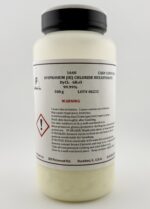
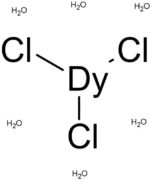
Dysprosium (III) Chloride hexahydrate (DyCl₃·6H₂O) is a pale yellow crystalline solid. The hexahydrate complex is highly water-soluble, making it an ideal Dysprosium precursor for the preparation of a wide range of Dysprosium-containing materials.
Dysprosium itself is a critical component in advanced magnetic and optical materials. It is commonly used as a dopant in permanent magnets, particularly Neodymium–Iron-Boron (NdFeB) magnets, where it improves coercivity and thermal stability. These magnets are essential in high-performance applications such as electric motors, wind turbines, and other energy conversion devices. Additionally, dysprosium is employed as a dopant in phosphor materials, enhancing the performance of LEDs and fluorescent lamps by modifying their emission properties.
Dysprosium chloride hexahydrate is especially valuable in synthesis methods that require precise control over homogeneity and particle formation. Its high water solubility makes it well-suited for solution-based techniques such as sol-gel synthesis, hydrothermal synthesis, and co-precipitation, where uniform distribution of metal ions is essential. Furthermore, this solubility enables the efficient preparation of high-purity, well-defined materials with tailored magnetic, optical, or electronic properties.
- Miya, L., Sithole, E., & Modiba, R. (2025). Effects of Earth Metal Dopants on the Properties of a Neodymium Magnet Using a First-Principles Approach. ACS Omega, 10(11), 10997–11006. https://doi.org/10.1021/ACSOMEGA.4C09369
- Sahu, I. P., Chandrakar, P., Baghel, R. N., Bisen, D. P., Brahme, N., & Tamrakar, R. K. (2015). Luminescence properties of dysprosium doped calcium magnesium silicate phosphor by solid state reaction method. Journal of Alloys and Compounds, 649, 1329–1338. https://doi.org/10.1016/J.JALLCOM.2015.06.011
- Kaynar, Ü. H., Coban, M. B., Madkhli, A. Y., Ayvacikli, M., & Can, N. (2023). Phase transition and luminescence characteristics of dysprosium doped strontium stannate phosphor synthesized using hydrothermal method. Ceramics International, 49(7), 11641–11646. https://doi.org/10.1016/J.CERAMINT.2022.12.011
- Ballato, J., Riman, R. E., & Snitzer, E. (1997). Sol-gel synthesis of rare-earth-doped lanthanum halides for highly efficient 1.3-µm optical amplification. Optics Letters, Vol. 22, Issue 10, Pp. 691-693, 22(10), 691–693. https://doi.org/10.1364/OL.22.000691
Safety

- H315Causes skin irritation.
- H319Causes serious eye irritation.
- H335May cause respiratory irritation.
- P261Avoid breathing dust/fume/gas/mist/vapours/spray.
- P264Wash skin thoroughly after handling.
- P271Use only outdoors or in a well-ventilated area.
- P280Wear protective gloves/protective clothing/eye protection/face protection.
- P302+P352IF ON SKIN: wash with plenty of soap and water.
- P304+P340IF INHALED: Remove victim to fresh air and Keep at rest in a position comfortable for breathing.
- P305+P351+P338IF IN EYES: Rinse cautiously with water for several minutes. Remove contact lenses, if present and easy to do. Continue rinsing.
- P362Take off contaminated clothing and wash before reuse.
- P403+P233Store in a well-ventilated place. Keep container tightly closed.
Learn about this element
