

Neodymium (III) Chloride, anhydrous
Properties
- We can offer items in bulk or custom. For other quantities or purities, please request a quotation.
- All prices are subject to change.
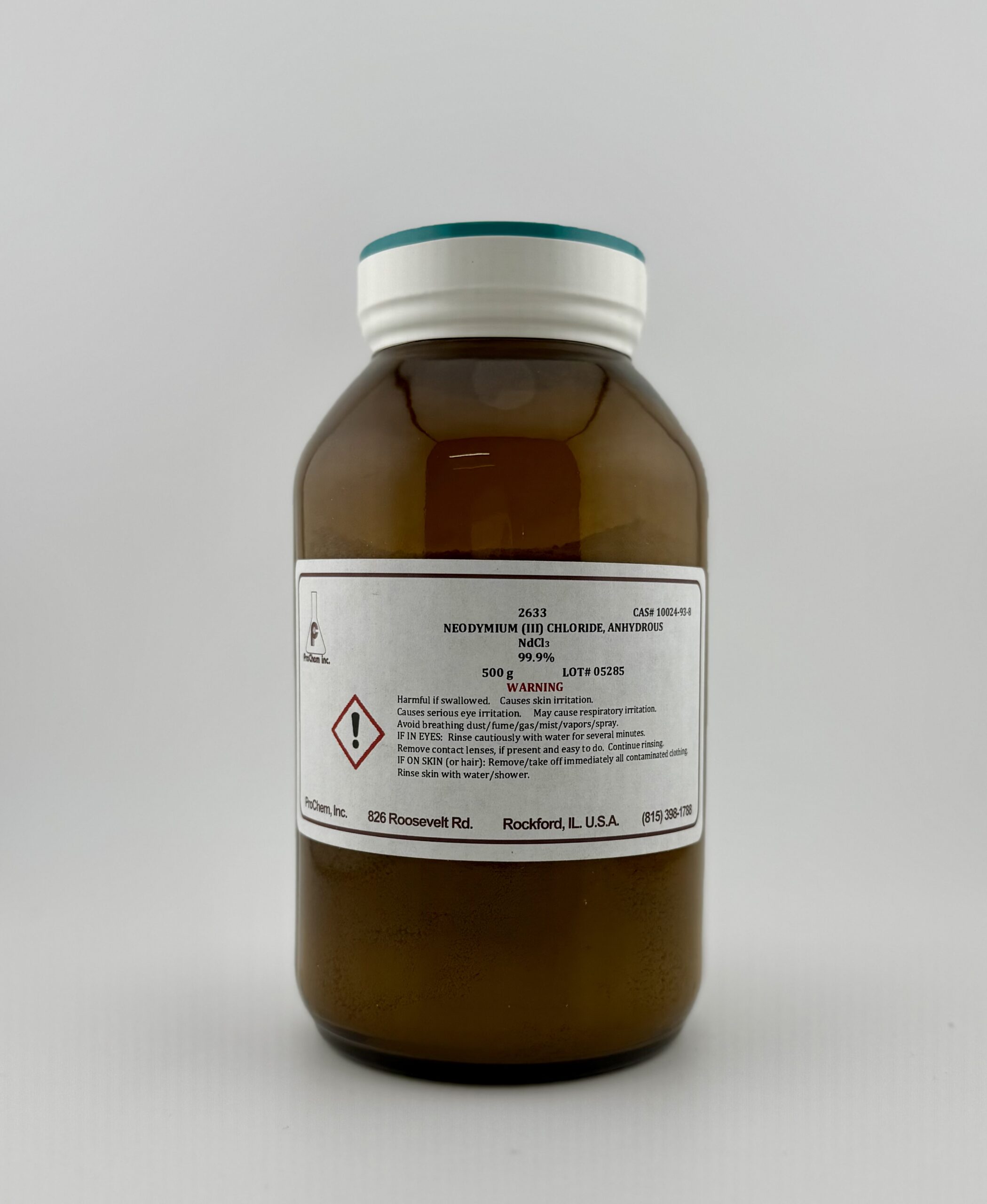
Information about Neodymium (III) Chloride, anhydrous / CAS 10024-93-8
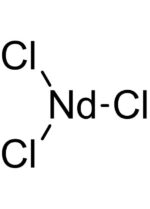
Neodymium Chloride (NdCl₃), particularly in its anhydrous form, is an important compound with distinct chemical properties that enable a wide array of research and laboratory applications as well as utility in specialty industrial process. As a highly versatile rare-earth element compound, anhydrous Neodymium Chloride plays a pivotal role in many areas such as catalysis, energy storage, materials science, and electronics, offering substantial benefits in both research and industrial processes.
In the field of polymer chemistry, Neodymium Chloride is used as a catalyst in the polymerization of conjugated dienes, which results in the production of synthetic rubbers with superior mechanical properties. These rubbers are essential in industries such as automotive manufacturing, where they are utilized in tire production and other high-performance industrial applications. By using Neodymium-based catalysts, manufacturers can produce polymers with more controlled microstructures, contributing to better thermal stability and enhanced durability, which are crucial for products exposed to harsh environments.
A significant laboratory application of anhydrous Neodymium Chloride is in the synthesis of Neodymium-based complexes. These complexes exhibit unique redox properties and have been explored in research for potential applications in energy storage and conversion technologies. Neodymium’s ability to undergo multi-electron redox processes makes it an ideal component in developing advanced batteries and capacitors. As demand for efficient and sustainable energy storage solutions increases, the importance of these complexes in next-generation energy devices is expected to grow, supporting industries focusing on renewable energy and high-efficiency electronic components.
In materials science, Neodymium Chloride is often employed in the preparation of doped Ceria nanoparticles, which exhibit enhanced optical and structural characteristics compared to undoped ceria. When Cerium (III) Chloride is doped with Neodymium Chloride, the resulting nanoparticles have been studied for their potential applications in catalysis and as phosphors for lighting and display technologies. These doped nanoparticles have found applications in the production of more efficient and longer-lasting lighting systems, displays, and other optical devices. Their ability to improve performance in these sectors aligns with the ongoing push for more efficient and sustainable electronic products.
The compound also plays a significant role in the development of magnetic materials. Doping metal-oxide-based materials with Neodymium Chloride has been investigated for its effects on electrical and magnetic properties, with potential applications in data storage and memory devices. As the demand for advanced electronic components continues to rise, the ability to manipulate material properties with rare-earth elements like Neodymium becomes crucial in the development of high-performance, next-generation technologies. This has opened up new possibilities for industries focused on electronics, information storage, and quantum computing.
- Lim, K. H., Choi, C. U., Moon, G., Lee, T. H., & Kang, J. (2021). Selective chlorination of rare earth elements from a Nd-Fe-B magnet using zinc chloride. Journal of Sustainable Metallurgy, 7(3), 794-805.
- A. R. Villani, P. Scardala, B. Brunetti, and V. Piacente, (2002) Sublimation Enthalpies of Neodymium Trichloride, Tribromide and Triiodide from Torsion Vapor Pressure Measurements Journal of Chemical & Engineering Data 47 (3), 428-434
Safety

- H303May be harmful if swallowed.
- H315Causes skin irritation.
- H319Causes serious eye irritation.
- H335May cause respiratory irritation.
- P261Avoid breathing dust/fume/gas/mist/vapours/spray.
- P305+P351+P338IF IN EYES: Rinse cautiously with water for several minutes. Remove contact lenses, if present and easy to do. Continue rinsing.
- P303+P361+P353IF ON SKIN (or hair): Remove/Take off Immediately all contaminated clothing. Rinse SKIN with water/shower.
Learn about this element
