


Expanding SHIELD Collaborations and Defense Industry Partnerships
 The Space & Missile Defense Symposium, held annually in Huntsville Alabama, is one of the defense community’s most influential gatherings – bringing together government agencies, military leaders, prime contractors, engineers, and emerging suppliers to discuss the technologies and strategies shaping the future of U.S. missile defense and space-based systems. The symposium has served as a central forum for advancing integrated air and missile defense, hypersonics, directed energy, sensor modernization, and resilient supply-chain initiatives across the defense industrial base for the last 29 years.
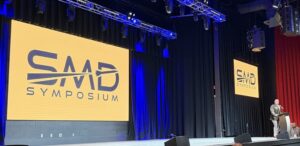
Lieutenant General John Rafferty addresses the attendees at the opening reception
For ProChem Inc. attending this year’s symposium, August 10 – 13th, provided a valuable opportunity to engage directly with the teams developing these technologies and to better understand the material challenges behind next-generation defense systems. This year also marked an important milestone for our company: ProChem Inc. was awarded a contract under the Missile Defense Agency‘s SHIELD IDIQ, a program designed to strengthen the industrial base supporting critical defense technologies. Being at SMD allowed us to connect with fellow SHIELD awardees and prime contractors seeking capable U.S. small-business partners for subcontracting and materials support.
Materials Supporting Defense Innovation
Many of our discussions at SMD centered on the materials science behind emerging defense technologies. ProChem’s product families support several of these critical areas:
- Thermal-barrier coatings and high-temperature ceramics: Compounds such as Yttrium Oxide (Y2O3), Cerium Oxide (CeO2), and other Lanthanide Oxides are used in advanced ceramics and protective coatings that withstand extreme temperatures in propulsion systems, hypersonic vehicles, and aeronautics components.
- Optical, IR, and Spectral Detection Materials: Rare Earth Fluorides like YF3 and YbF3 along with high-purity acetates and sulfates support the fabrication of infrared windows, optical crystals, scintillators, and sensor elements used in missile seekers, space-based surveillance, and multi-sensor fusion technologies.
- Semiconductor and directed-energy materials: Compounds such as Bismuth Nitrate, Cadmium Acetate, and Zinc Acetate, are used in semiconductor and photonic materials that enable laser systems, detectors, and high-performance electronics essential to modern missile defense architectures.
- Thin-film and ALD/CVD precursor development: Molybdenum (VI) Tetrachloride Oxide (MoOCl4), Cerium Acetylacetonate, and other lanthanide acetylacetonates serve as high-purity precursors for thin-film deposition and advanced material engineering. These materials enable the formation of radiation-hard electronics, high-performance semiconductor layers, and specialized optical and electronic coatings used across missile defense, space-based platforms, and next-generation sensor systems.
These materials are foundational to components that ultimately make their way into missile interceptors, satellite payloads, propulsion assemblies, sensor arrays, and aeronautics platforms. For many manufacturers, securing a reliable U.S. source for these inputs is essential not only for performance but also for meeting small-business subcontracting requirements – a priority emphasized throughout the SHIELD program.
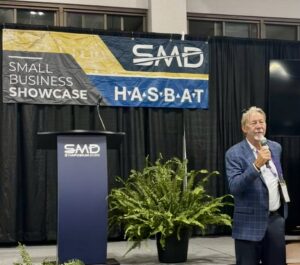
Our CEO Reno Novak, who attended the symposium, commented, “The innovation happening across the space and missile defense community is remarkable and seeing it firsthand was both exciting and motivating. The technologies being developed demand materials with exceptional purity and consistency, and we’re committed to delivering exactly that here in the United States. We see tremendous opportunity to support OEMs with the precursors we produce and to contribute meaningfully to the mission that ultimately serves our warfighters.”
If you connected with us at SMD, or if you’d like to learn more about how ProChem can support your materials needs, we encourage you to reach out through our website or call us to schedule a meeting.