
Gadolinium (III) Chloride Hexahydrate
Properties
- We can offer items in bulk or custom. For other quantities or purities, please request a quotation.
- All prices are subject to change.
Related Products
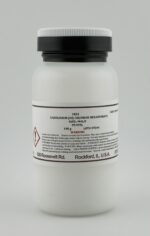
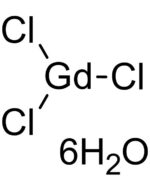
Information about Gadolinium (III) Chloride Hexahydrate / CAS 13450-84-5
Gadolinium (III) chloride hexahydrate is a white, water-soluble rare earth salt whose Gd³⁺ ion contains seven unpaired electrons, giving it the highest theoretical spin-only magnetic moment. As a result, it is widely used in the preparation of magnetic materials, including MRI contrast agents. In addition, Gadolinium has a high neutron-capture cross-section, making it an effective neutron absorber for applications in nuclear technology and neutron capture therapy.
For example, researchers from several institutions in Tianjin, China synthesized Gadolinium-doped Silicon nanoparticles using Gadolinium Chloride as a precursor, taking advantage of its solubility in hydrothermal processing. The resulting materials exhibited low biotoxicity, strong magnetic resonance signals, and excellent optical properties. In another study, researchers from institutions in Miyagi and Tokyo, Japan used Gadolinium trichloride hexahydrate as a soluble precursor to prepare Gadolinium Borate nanoparticles via a hydrothermal method. These nanoparticles showed no evidence of significant cytotoxicity and demonstrated promise for tumor accumulation in neutron capture therapy applications.
References:
- Li, S., Wang, F., He, X. W., Li, W. Y., & Zhang, Y. K. (2018). One-pot hydrothermal preparation of gadolinium-doped silicon nanoparticles as a dual-modal probe for multicolor fluorescence and magnetic resonance imaging. Journal of Materials Chemistry B, 6(20), 3358–3365. https://doi.org/10.1039/C8TB00415C
- Mikami, K., Kanetaka, H., Furuya, M., Yokota, K., Saijo, Y., Yokoi, T., & Kawashita, M. (2021). Hydrothermal synthesis and preliminary cytotoxicity assessment of gadolinium borate nanoparticles for neutron capture therapy. Journal of Nanoparticle Research 2021 23:9, 23(9), 201-. https://doi.org/10.1007/S11051-021-05311-4
- Kuznetsov, S. v., Sedov, V. S., Martyanov, A. K., Batygov, S. C., Vakalov, D. S., Boldyrev, K. N., Tiazhelov, I. A., Popovich, A. F., Pasternak, D. G., Bland, H., Mandal, S., Williams, O., Nikova, M. S., & Tarala, V. A. (2022). Cerium-doped gadolinium-scandium-aluminum garnet powders: synthesis and use in X-ray luminescent diamond composites. Ceramics International, 48(9), 12962–12970. https://doi.org/10.1016/J.CERAMINT.2022.01.169
- Liu, M., Zhang, Y., Hu, S., Zhou, G., Qin, X., & Wang, S. (2024). Preparation of Ce-Doped Gd3(Al, Ga)5O12 Nanopowders via Microwave-Assisted Homogenization Precipitation for Transparent Ceramic Scintillators. Materials 2024, Vol. 17, Page 1258, 17(6), 1258. https://doi.org/10.3390/MA17061258
- Grippa, A. Y., Datsko, Y. N., Zelenskaya, O. v., & Kosinov, N. N. (2010). Synthesis and scintillation properties of GdCl3:Ce3+ (Gd1−xCexCl3, x = 0.005–0.08). Radiation Measurements, 45(3–6), 398–399. https://doi.org/10.1016/J.RADMEAS.2009.11.044
Safety

- H315Causes skin irritation.
- H319Causes serious eye irritation.
- H335May cause respiratory irritation.
- P261Avoid breathing dust/fume/gas/mist/vapours/spray.
- P271Use only outdoors or in a well-ventilated area.
- P280Wear protective gloves/protective clothing/eye protection/face protection.
- P302+P352IF ON SKIN: wash with plenty of soap and water.
- P304+P340IF INHALED: Remove victim to fresh air and Keep at rest in a position comfortable for breathing.
- P305+P351+P338IF IN EYES: Rinse cautiously with water for several minutes. Remove contact lenses, if present and easy to do. Continue rinsing.
- P312Call a POISON CENTER or doctor/physician if you feel unwell.
- P362Take off contaminated clothing and wash before reuse.
- P403+P233Store in a well-ventilated place. Keep container tightly closed.
Learn about this element
