

Nickel (II) Chloride
Properties

- We can offer items in bulk or custom. For other quantities or purities, please request a quotation.
- All prices are subject to change.
Information about Nickel (II) Chloride / CAS 7718-54-9
Nickel (II) chloride (NiCl2) or Nickel Dichloride is a water-soluble crystalline solid. As a hexahydrate it has a green color while the anhydrous form is yellow. Both forms are deliquescent and must be protected from moisture in storage. Nickel (II) Chloride has applications in many industries, including electroplating, dyes and pigments, catalyst production, and the synthesis of Nickel-containing materials.
Aqueous solutions of both Nickel Chloride and Nickel Sulfate are commonly used in solutions for electroplating nickel, since they are both highly soluble. Solutions made with Nickel Chloride are more corrosive than those made with Nickel Sulfate. However, the solutions are more conductive, reducing power consumption during the deposition process. In addition, the Nickel coating is more uniform. In practice, deposition solutions may contain a mixture of both nickel salts.
Nickel ions are also redox-active and can be used to prepare catalysts. For example, chemists from the chemical company Rhône-Poulenc in Paris were searching for a replacement for Raney Nickel catalyst, which is pyrophoric. They were able to prepare Nickel Boride catalysts by reacting Nickel Chloride hexahydrate with Sodium Borohydride. The catalyst was effective at hydrogenation and easier to store and handle. Across the globe at Kyoto University in Japan, chemical engineers prepare a different catalyst for hydrogenation, using anhydrous Nickel Chloride and methylhydropolysiloxane.
Nickel dichloride can also be used to prepare Nickel-Oxide-based materials. The decomposition of Nickel Chloride hydrate to Nickel Oxide is complex, but the material is completely converted to nickel oxide above 850 degrees Celsius. However, thin films of nickel oxide can be prepared at lower temperatures. Researchers at Alagappa University in Karaikudi, India produced Nickel Oxide thin films by spraying aqueous Nickel (II) Chloride onto heated glass, where it is rapidly deposited via evaporation and pyrolytic decomposition. These films are electrochromic and useful in sensors and solar cells.
- di Bari, G. A. (2010). Electrodeposition of Nickel. In Modern Electroplating (5th ed., Issue 1). John Wiley & Sons, Inc. https://doi.org/https://doi.org/10.1002/9780470602638.ch3
- Feiz, M., & Norouzi, H. (2015). Dyeing studies of wool fibers with madder (Rubia tinctorum) and effect of different mordants and mordanting procedures on color characteristics of dyed samples. Fibers and Polymers 2014 15:12, 15(12), 2504–2514. https://doi.org/10.1007/s12221-014-2504-x
- Siqueira, C., Schons, A. B., Appelt, P., Silva, W. D., Balaba, N., Cunha, M. A. A., & Anaissi, F. J. (2024). Synthesis of Green Brucite [NixMg1−x(OH)2] by Incorporation of Nickel Ions in the Periclase Phase (MgO) Applied as Pigments. Colorants 2024, Vol. 3, Pages 138-151, 3(2), 138–151. https://doi.org/10.3390/colorants3020011
- Paul, R., Buisson, P., & Joseph, N. (1952). Catalytic Activity of Nickel Borides. Industrial & Engineering Chemistry, 44(5), 1006–1010. https://doi.org/10.1021/ie50509a029
- Takegami, Y., Ueno, T., & Masunaga, K. (1967). The Activity of a Catalyst from Nickel Chloride and Methyl-hydropolysiloxane in the Hydrogenation of Olefins. Bulletin of the Chemical Society of Japan, 40(8), 1930–1933. https://doi.org/10.1246/bcsj.40.1930
- Gowthami, V., Perumal, P., Sivakumar, R., & Sanjeeviraja, C. (2014). Structural and optical studies on nickel oxide thin film prepared by nebulizer spray technique. Physica B: Condensed Matter, 452, 1–6. https://doi.org/10.1016/j.physb.2014.06.030
- Wesley, W. A., & Carey, J. W. (1939). The Electrodeposition of Nickel from Nickel Chloride Solutions. Transactions of The Electrochemical Society, 75(1), 209. https://doi.org/10.1149/1.3498368
- Mishra, S. K., & Kanungo, S. B. (1992). Thermal dehydration and decomposition of nickel chloride hydrate (NiCl2·xH2O). Journal of Thermal Analysis 1992 38:11, 38(11), 2417–2436. https://doi.org/10.1007/BF01974621
Safety


- H301+H331Toxic if swallowed or inhaled.
- H315Causes skin irritation.
- H317May cause an allergic skin reaction.
- H334May cause allergy or asthma symptoms or breathing difficulties if inhaled.
- H341Suspected of causing genetic defects.
- H350May cause cancer.
- H360May damage fertility or the unborn child.
- H372Causes damage to organs through prolonged or repeated exposure.
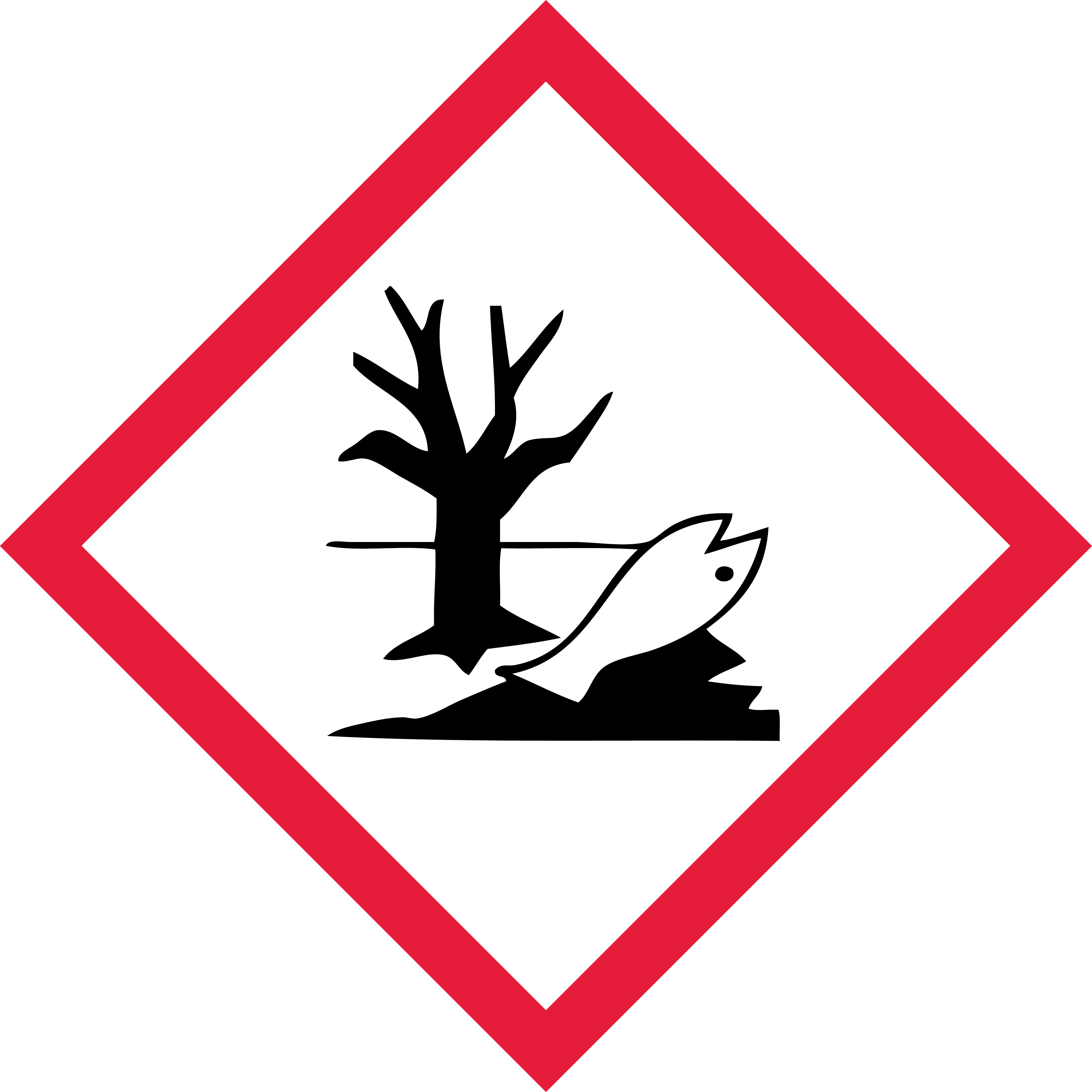
- H410Very toxic to aquatic life with long lasting effects.
- P201Obtain special instructions before use.
- P202Do not handle until all safety precautions have been read and understood.
- P260Do not breathe dust/fume/gas/mist/vapours/spray.
- P270Do not eat, drink or smoke when using this product.
- P280Wear protective gloves/protective clothing/eye protection/face protection.
- P301+P310+P330IF SWALLOWED: Immediately call a POISON CENTER or doctor/physician. Rinse mouth.
- P302+P352IF ON SKIN: wash with plenty of soap and water.
- P304+P340+311Unknown hazard statement
Learn about this element
