


Gallium (III) Acetylacetonate
Properties
- We can offer items in bulk or custom. For other quantities or purities, please request a quotation.
- All prices are subject to change.
Information about Gallium (III) Acetylacetonate / CAS 14405-43-7
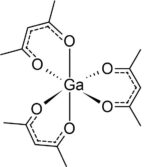
Gallium (III) Acetylacetonate (Ga(AcAc)₃) is a metal-organic coordination complex widely used as a precursor in material synthesis, thin-film deposition, and semiconductor applications. With moderate solubility in certain organic solvents and controlled thermal stability, this compound plays a crucial role in the fabrication of Gallium Oxide (Ga₂O₃) thin films, nanomaterials, and electronic components.
One of the primary applications of Ga(AcAc)₃ is in semiconductor and electronic device fabrication. It is a key precursor for atomic layer deposition (ALD) and metalorganic chemical vapor deposition (MOCVD) of Gallium Oxide (Ga₂O₃) thin films. These films are fundamental in high-power electronic devices and UV photodetectors. Research has shown that Ga₂O₃-based power devices exhibit promising electrical properties, making them suitable for power electronics and optoelectronics. Additionally, Ga(AcAc)₃ is being studied as an alternative precursor for GaN in research settings, though Trimethylgallium (TMGa) remains the dominant choice for GaN MOCVD.
In the field of nanotechnology, Gallium (III) Acetylacetonate is used to synthesize Gallium Oxide nanostructures and Gallium Nitride (GaN), both of which play a role in optoelectronics. GaN is widely used in light-emitting diodes (LEDs), laser diodes, and high-frequency electronic applications, due to its wide bandgap and excellent electrical properties.
Gallium (III) acetylacetonate’s controlled volatility supports efficient processing in vapor-phase deposition techniques like MOCVD and ALD, leading to uniform thin-film formation. Additionally, its thermal behavior allows for controlled decomposition, aiding in the production of high-purity gallium-based films and nanomaterials. Its compatibility with dopants may enable the engineering of materials with tailored electronic and optical characteristics, though further studies continue to refine these applications.
- Chen, R., Sathasivam, S., Borowiec, J., & Carmalt, C. J. (2024). An Aerosol-Assisted Chemical Vapor Deposition Route to Tin-Doped Gallium Oxide Thin Films with Optoelectronic Properties. ACS Applied Electronic Materials, 6(8), 6085-6091. https://doi.org/10.1021/acsaelm.4c00973
- Nieminen, M., Niinistö, L., & Rauhala, E. (1996). Growth of gallium oxide thin films from gallium acetylacetonate by atomic layer epitaxy. Journal of Materials Chemistry, 6(1), 27-31. https://doi.org/10.1039/JM9960600027
Safety


- H302+H312+H332Harmful if swallowed, in contact with skin, or by inhalation.
- H315Causes skin irritation.
- H319Causes serious eye irritation.
- H335May cause respiratory irritation.
- H351Suspected of causing cancer.
- P201Obtain special instructions before use.
- P202Do not handle until all safety precautions have been read and understood.
- P261Avoid breathing dust/fume/gas/mist/vapours/spray.
- P264Wash skin thoroughly after handling.
- P270Do not eat, drink or smoke when using this product.
- P271Use only outdoors or in a well-ventilated area.
- P280Wear protective gloves/protective clothing/eye protection/face protection.
- P301+P312+P330IF SWALLOWED: Call a POISON CENTER or doctor/physician if you feel unwell. Rinse mouth.
- P302+P352+P312IF ON SKIN: Wash with plenty of soap and water. Call a POISON CENTER or doctor/physician if you feel unwell.
- P304+P340+P312IF INHALED: Remove victim to fresh air and keep at rest in a position comfortable for breathing. Call a POISON CENTER or doctor/physician if you feel unwell.
Learn about this element
