
Niobium (V) Ethoxide
Properties
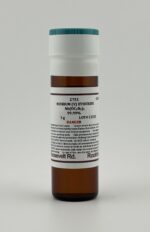
- We can offer items in bulk or custom. For other quantities or purities, please request a quotation.
- All prices are subject to change.
Information about Niobium (V) Ethoxide / CAS 3236-82-6
Niobium (V) ethoxide (Nb(OC2H5)5) is a Niobium-based alkoxide widely used as a precursor in material synthesis, catalysis, and nanotechnology research, with emerging applications in specialty industrial applications. Its high reactivity and solubility in organic solvents make it ideal for applications requiring controlled hydrolysis and condensation reactions. The materials science, electronics, and pharmaceuticals industries leverage Niobium (V) Ethoxide to develop advanced functional materials. It plays a crucial role in sol-gel chemistry, forming niobium oxide thin films used in coatings, sensors, and dielectric applications.
Niobium (V) Ethoxide is a key precursor in laboratories synthesizing niobium-based catalysts, enhancing catalytic performance in polymerization, oxidation, and hydrogenation reactions. It has been studied in ring-opening polymerization of ε-caprolactone, with potential applications in high-performance polymer materials. Niobium (V) Ethoxide is also being explored for potential hydrogen storage enhancements. The catalytic activity of these oxides enhances the desorption and absorption of Hydrogen, supporting advancements in clean energy storage systems.
Niobium (V) Ethoxide is a vital precursor in Lithium Niobate ceramic synthesis, contributing to the development of high-performance electronic components such as optical waveguides, piezoelectric sensors, and electro-optic modulators. Its structural integrity and controlled hydrolysis properties make it suitable for precision manufacturing in the electronics industry.
In materials science, Niobium (V) Ethoxide is useful in producing mesoporous Niobium Oxide structures with high surface areas, crucial for catalysis and adsorption-based applications. These materials have demonstrated enhanced efficiency in gas separation and water purification technologies.
Niobium (V) Ethoxide is also extensively used in surface modification and coatings. Its ability to form stable oxide layers enhances corrosion resistance, making it valuable for aerospace and industrial coatings. Additionally, its integration into bioactive coatings supports bone regeneration and implant stability.
- Biqiong Wang, Yang Zhao, Mohammad Norouzi Banis, Qian Sun, Keegan R. Adair, Ruying Li, Tsun-Kong Sham, and Xueliang Sun (2018), Atomic Layer Deposition of Lithium Niobium Oxides as Potential Solid-State Electrolytes for Lithium-Ion Batteries, ACS Applied Materials & Interfaces 10 (2), 1654-1661
- Timothy J. Boyle, Todd M. Alam, Duane Dimos, Gregorio J. Moore, Catherine D. Buchheit, Husam N. Al-Shareef, Eric R. Mechenbier, Blakely R. Bear, and Joseph W. Ziller (1997) Niobium(V) Alkoxides. Synthesis, Structure, and Characterization of [Nb(μ-OCH2CH3)(OCH2C(CH3)3)4]2, {[H3CC(CH2O)(CH2-μ-O)(C(O)2)]Nb2(μ-O)(OCH2CH3)5}2, and {[H3CC(CH2O)2(CH2-μ-O)]Nb(OCH2CH3)2}2 for Production of Mixed Metal Oxide Thin Films, Chemistry of Materials, 9 (12), 3187-3198
Safety


- H226Flammable liquid and vapor.
- H314Causes severe skin burns and eye damage.
- P210Keep away from heat/sparks/open flames/hot surfaces. — No smoking.
- P233Keep container tightly closed.
- P240Ground/bond container and receiving equipment.
- P241Use explosion-proof electrical/ventilating/lighting/.../equipment.
- P242Use only non-sparking tools.
- P243Take precautionary measures against static discharge.
- P280Wear protective gloves/protective clothing/eye protection/face protection.
- P301+P330+P331IF SWALLOWED: Rinse mouth. Do NOT induce vomiting.
- P304+P340IF INHALED: Remove victim to fresh air and Keep at rest in a position comfortable for breathing.
- P305+P351+P338IF IN EYES: Rinse cautiously with water for several minutes. Remove contact lenses, if present and easy to do. Continue rinsing.
- P370+P378In case of fire: Use ... for extinction.