


Tin (IV) t-Butoxide
Properties

- We can offer items in bulk or custom. For other quantities or purities, please request a quotation.
- All prices are subject to change.
Information about Tin (IV) t-Butoxide / CAS 36809-75-3
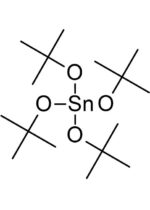
Tin (IV) tert-Butoxide (Sn[OC(CH3)3]4) is a highly reactive organotin compound widely utilized as a precursor in material synthesis, catalysis, and surface functionalization. Its unique chemical properties make it an essential component in developing Tin Dioxide (SnO₂) films, nanoparticles, and advanced functional materials. Tin (IV) tert-Butoxide is a volatile and thermally decomposable compound. It is moisture sensitive and can be complex to handle. It is extensively used in chemical vapor deposition (CVD) and atomic layer deposition (ALD) processes and can enable the controlled fabrication of thin films for electronic and optical applications.
Industries such as electronics, catalysis, materials science, and nanotechnology leverage Tin (IV) t-Butoxide for its efficiency in forming highly uniform coatings and advanced ceramic materials. The material’s excellent stability and reactivity allow precise control over the deposition process, making it valuable for developing gas sensors, transparent conductive oxides, and high-performance transistors.
Tin (IV) tert-Butoxide is also used in the synthesis of Tin-based zeolites and metallosilicate catalysts, which are extensively used in petrochemical refining and biomass conversion. These catalysts enhance the efficiency of esterification, transesterification, and oxidation reactions, making them indispensable for sustainable chemical processes. The compound’s role in creating highly dispersed Tin species within porous materials ensures superior catalytic activity and longevity.
Tin (IV) t-Butoxide also has a critical role in radical chemistry, acting as a precursor for free radical reactions used in synthesizing complex organic molecules. This is particularly useful in drug discovery and development of novel polymers with tailored functionalities. Its role in developing high-transmittance films, efficient photocatalysts for wastewater treatment, and next-gen smart window technologies highlights its versatility.
- Luo, L., Häfliger, K., Xie, D. et al. Transparent conducting Sn:ZnO films deposited from nanoparticles. J Sol-Gel Sci Technol 65, 28–35 (2013). https://doi.org/10.1007/s10971-012-2709-7
- Spanos, A. P., Ford, L., Guo, J., Burrows, R., Kulkarni, A. R., & Brunelli, N. A. (2024). Organo tin precursors for synthesis of zeolite Sn-Beta for alcohol ring opening of epoxides. Catalysis Science & Technology, 14(20), 5833-5837. https://doi.org/10.1039/D4CY00837E
Safety


- H302+H312Harmful if swallowed or in contact with skin.
- H315Causes skin irritation.
- H319Causes serious eye irritation.
- H331Toxic if inhaled.
- H335May cause respiratory irritation.
- P261Avoid breathing dust/fume/gas/mist/vapours/spray.
- P264Wash skin thoroughly after handling.
- P270Do not eat, drink or smoke when using this product.
- P271Use only outdoors or in a well-ventilated area.
- P280Wear protective gloves/protective clothing/eye protection/face protection.
- P302+P352IF ON SKIN: wash with plenty of soap and water.
- P304+P340IF INHALED: Remove victim to fresh air and Keep at rest in a position comfortable for breathing.
- P305+P351+P338IF IN EYES: Rinse cautiously with water for several minutes. Remove contact lenses, if present and easy to do. Continue rinsing.
- P362Take off contaminated clothing and wash before reuse.
- P403+P233Store in a well-ventilated place. Keep container tightly closed.