
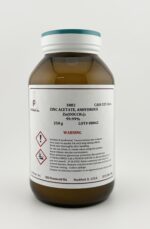
Zinc Acetate, anhydrous
Properties
- We can offer items in bulk or custom. For other quantities or purities, please request a quotation.
- All prices are subject to change.
Related Products
Information about Zinc Acetate, anhydrous / CAS 557-34-6
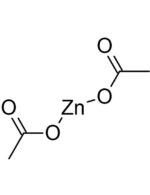
Anhydrous Zinc (II) Acetate, Zn(CH3COO)2 is a white crystalline solid. The material is moisture-sensitive but can be dried by heating above 100° C. It is highly soluble in water as well as various polar organic solvents including ethanol. Zinc salts are inexpensive, non-toxic, and environmentally benign. Zinc Acetate is a highly favored Lewis acid in organic synthesis. It can be employed for complex regio- and enantioselective catalytic transformations. Furthermore, it has been employed in the catalytic depolymerization of polyurethane to produce monomers, which hold potential for future recycling processes.
When the anhydrous form is sublimed, it forms basic Zinc Acetate, Zn4O(CH3COO)6. This precursor is conducive for forming Zinc Oxide thin films via various deposition methods. For example, researchers from the University of New South Wales in Australia utilized anhydrous Zinc diacetate as a volatile precursor to grow Zinc Oxide thin films on crystalline copper substrates via chemical vapor deposition. Their investigation revealed that the controlled thermal decomposition of the precursor produces highly uniform and adherent metal oxide layers suitable for electronic applications such as electrodes and piezoelectric transducers.
Due to its solubility, anhydrous Zinc Acetate can also be incorporated into sol-gel syntheses. For example, researchers from Tyndall National Institute and University College Cork, in Ireland used sol-gel methods to prepare Zinc Oxide thin films. They prepared samples with anhydrous Zinc Acetate and dihydrate Zinc Acetate, to compare the resultant materials made by the two different starting materials. The materials made from the anhydrous precursor had a larger crystallite size and a more porous morphology, making it more suitable for possible microelectronic and optoelectronic applications.
References
- Mar, L. G.; Timbrell, P. Y.; Lamb, R. N. An XPS study of zinc oxide thin film growth on copper using zinc acetate as a precursor. Thin Solid Films 1993, 223, 341–347. https://doi.org/10.1016/0040-6090(93)90542-w
- Grévy, J.-M. Zinc: Organometallic Chemistry. In Encyclopedia of Inorganic and Bioinorganic Chemistry; John Wiley & Sons, Ltd., 2011.https://doi.org/10.1002/9781119951438.eibc0243
- Alam, M. M.; Varala, R.; Seema, V. Zinc Acetate in Organic Synthesis and Catalysis: A Review. Mini-Rev. Org. Chem. 2024, 21 (5), 555–587. https://doi.org/10.2174/1570193X20666230507213511
- Boezio, A. A.; Charette, A. B. Catalytic Enantioselective Addition of Dialkylzinc to N-Diphenylphosphinoylimines. A Practical Synthesis of α-Chiral Amines. Am. Chem. Soc. 2003, 125 (7), 1692–1693. https://doi.org/10.1021/ja027673x
- Copuroglu, M.; Koh, L. H. K.; O’Brien, S.; Crean, G. M. Comparative Characterisation of Zinc Oxide Thin Films Prepared from Zinc Acetate with or without Water of Hydration via the Sol-Gel Method. Sol-Gel Sci. Technol. 2009, 52, 432–438. https://doi.org/10.1007/s10971-009-2016-0
- Huiwen HeHang SuHanjing YuKaiming DuFan YangYifeng ZhuMeng MaYanqin ShiXiaojun ZhangSi ChenXu Wang; Chemical Recycling of Waste Polyurethane Foams: Efficient Acidolysis under the Catalysis of Zinc Acetate. ACS Sustainable Chem. Eng. 10 April 2023; 11 (14): 5515–5523. https://doi.org/10.1021/acssuschemeng.2c07260
Safety

- H302Harmful if swallowed.
- H319Causes serious eye irritation.
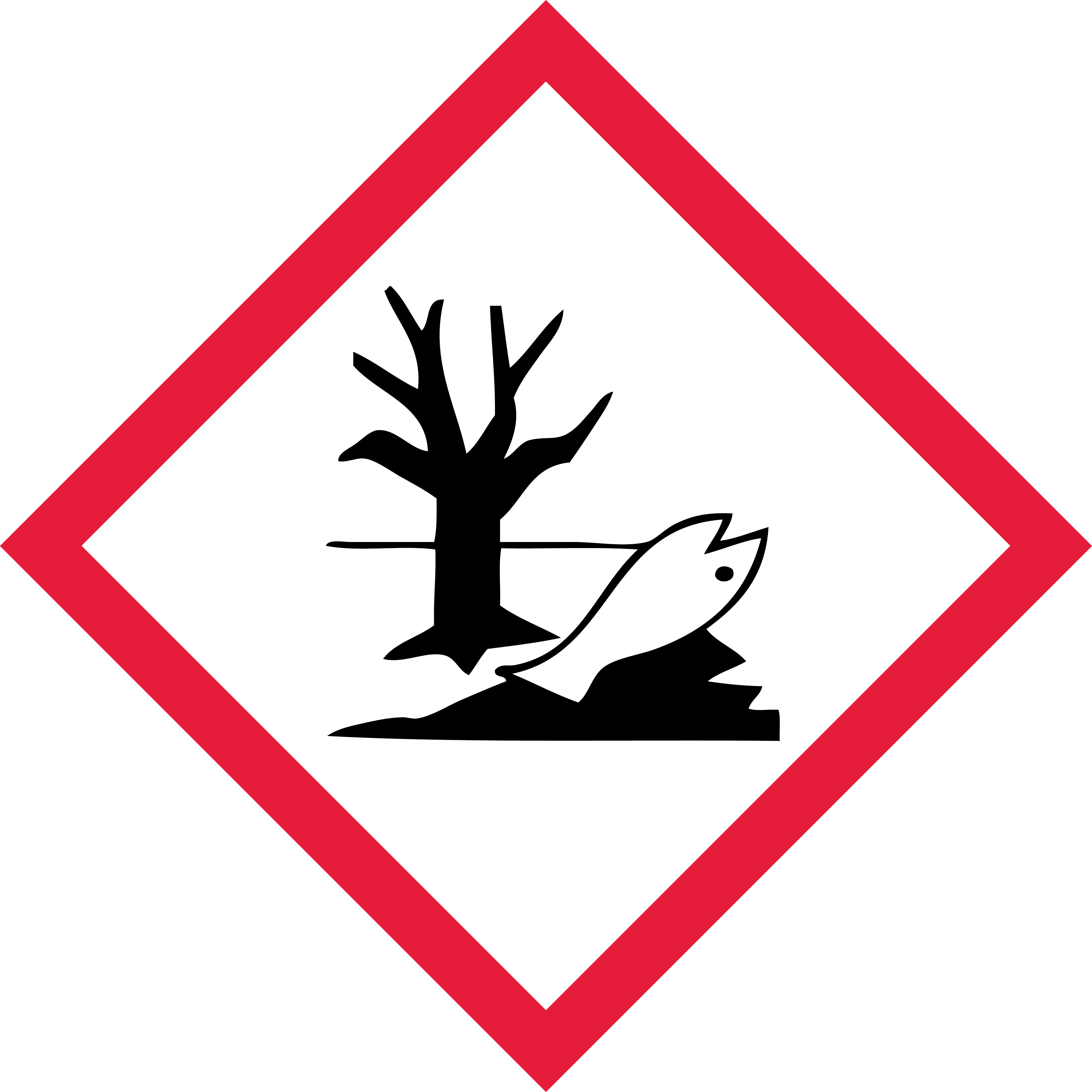
- H410Very toxic to aquatic life with long lasting effects.
- P264Wash skin thoroughly after handling.
- P270Do not eat, drink or smoke when using this product.
- P273Avoid release to the environment.
- P280Wear protective gloves/protective clothing/eye protection/face protection.
- P301+P312IF SWALLOWED: call a POISON CENTER or doctor/physician IF you feel unwell.
- P305+P351+P338IF IN EYES: Rinse cautiously with water for several minutes. Remove contact lenses, if present and easy to do. Continue rinsing.
- P391Collect spillage. Hazardous to the aquatic environment.
- P501Dispose of contents/container to.....
Learn about this element