

Copper (II) Sulfate Pentahydrate
Properties

- We can offer items in bulk or custom. For other quantities or purities, please request a quotation.
- All prices are subject to change.
Related Products
Information about Copper (II) Sulfate Pentahydrate / CAS 7758-99-8
Copper (II) Sulfate Pentahydrate (CuSO₄·5H₂O) is a blue crystalline solid that is highly soluble in water, making it useful for a wide range of applications. It functions as a fungicide, insecticide, pesticide, algaecide, root killer, and herbicide. Copper is also an essential nutrient and is used in veterinary medicine. In mining, Copper (II) Sulfate serves as a flotation reagent to separate Zinc and Lead from Sulfide ores. Additionally, it is used in electroplating.
Cuprous sulfate is extensively used in agriculture, horticulture, and water management due to its high solubility and bioactivity. In pools and ponds, it prevents algae growth, while solutions applied to plants act as fungicides, and treatments of wood prevent rot. Historically, it was also employed in bookbinding glues and pastes as an insecticidal agent. In veterinary medicine, Copper (II) Sulfate pentahydrate is highly bioavailable, serving as a nutritional supplement, a treatment for dermatitis, and in cattle footbaths to prevent and control digital dermatitis.
In mining, it functions as an activator in froth flotation processes, facilitating the selective enrichment of Zinc, Lead, and other metals from low-grade Sulfide ores in combination with surfactants. Additionally, Cuprous sulfate is the primary reagent in copper electroplating solutions, where it enables uniform metal deposition, with additives used to enhance brightness, coating adherence, and overall performance.
- Boone, C., Luukinen, B., Gervaise, J., Stone, D., & Buhl, K. (2012). Copper Sulfate Technical Fact Sheet. National Pesticide Information Center, Oregon State University Extension Services. https://npic.orst.edu/factsheets/archive/cuso4tech.html
- Lasota, S., Stephan, I., Horn, M. A., Otto, W., & Noll, M. (2019). Copper in Wood Preservatives Delayed Wood Decomposition and Shifted Soil Fungal but Not Bacterial Community Composition. Applied and Environmental Microbiology, 85(4), e02391-18. https://doi.org/10.1128/AEM.02391-18
- Angelova, L. v., Nawaz, S., Kafadaroğlu, B., Paz, B., Moreta, F., Woollaston, H., Vermeulen, M., & Vervoorst, J. (2023). The use of ‘poisonous insecticidal solutions’ in bookbinding: coping with historic pesticide treatments in the archive. Heritage Science, 11(1), 1–16. https://doi.org/10.1186/S40494-023-00866-Y;KWRD
- Amundson, L. A., Kirn, B. N., Swensson, E. J., Millican, A. A., & Fahey, G. C. (2024). Copper metabolism and its implications for canine nutrition. Translational Animal Science, 8, txad147. https://doi.org/10.1093/TAS/TXAD147
- Bjurstron, A. (2023). Footbath Management – Dairy. University of Wisconsin-Madison Dairy Division of Extension. https://dairy.extension.wisc.edu/articles/footbath-management/
- Marcin, M., Sisol, M., Laubertová, M., Kurty, J., & Gánovská, E. (2025). Optimization of the Froth Flotation Process for the Enrichment of Cu and Co Concentrate from Low-Grade Copper Sulfide Ore. Materials, 18(15), 3704. https://doi.org/10.3390/MA18153704
- Guo, L., Li, S., He, Z., Fu, Y., Qiu, F., Liu, R., & Yang, G. (2024). Electroplated Copper Additives for Advanced Packaging: A Review. ACS Omega, 9(19), 20637–20647. https://doi.org/10.1021/ACSOMEGA.4C01707
Safety

- H301Toxic if swallowed.
- H315Causes skin irritation.
- H319Causes serious eye irritation.
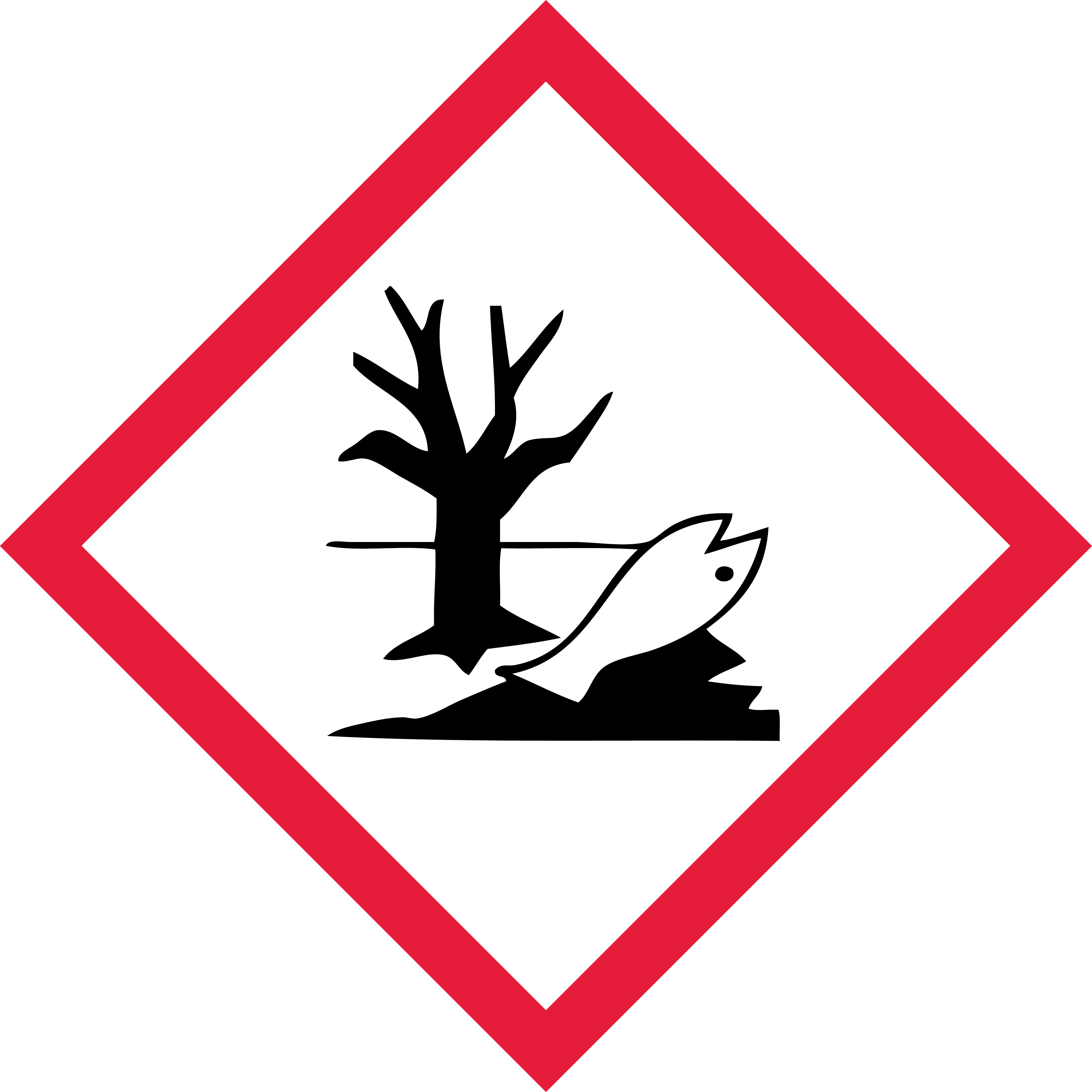
- H410Very toxic to aquatic life with long lasting effects.
- P260Do not breathe dust/fume/gas/mist/vapours/spray.
- P264Wash skin thoroughly after handling.
- P270Do not eat, drink or smoke when using this product.
- P273Avoid release to the environment.
- P280Wear protective gloves/protective clothing/eye protection/face protection.
- P301+P310IF SWALLOWED: Immediately call a POISON CENTER or doctor/physician.
- P302+P352IF ON SKIN: wash with plenty of soap and water.
- P305+P351+P338IF IN EYES: Rinse cautiously with water for several minutes. Remove contact lenses, if present and easy to do. Continue rinsing.
- P362Take off contaminated clothing and wash before reuse.