


Germanium (IV) Ethoxide
Properties
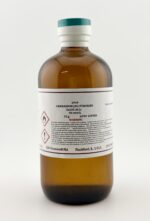

- We can offer items in bulk or custom. For other quantities or purities, please request a quotation.
- All prices are subject to change.
Related Products
Information about Germanium (IV) Ethoxide / CAS 14165-55-0
Germanium (IV) ethoxide, also known as Tetraethoxygermane, is a colorless, air-sensitive liquid that readily hydrolyzes in the presence of water or atmospheric moisture. It is primarily used as a precursor for Germanium-containing materials produced via sol-gel synthesis, chemical vapor deposition (CVD), or atomic layer deposition (ALD). These processes enable the fabrication of thin films, coatings, and nanoparticles for applications in transistors, integrated circuits, fiber optics, and infrared optics.
For example, researchers at the Korea Advanced Institute of Science and Technology employed Germanium Ethoxide in the sol-gel synthesis of Germanium Oxide and germosilicate glass films. Upon heating above 600 °C, the alkoxide decomposed readily to form uniform films, whose ultraviolet absorption properties were investigated to evaluate their suitability for diffraction grating applications.
Reference:
- Xu, J., & Almeida, R. M. (2000). Sol–gel derived germanium sulfide planar waveguides. Materials Science in Semiconductor Processing, 3(5–6), 339–344. https://doi.org/10.1016/S1369-8001(00)00053-6
- Chen, G., Chen, B., Liu, T., Mei, Y., Ren, H., Bi, Y., Luo, X., & Zhang, L. (2012). The synthesis and characterization of germanium oxide aerogel. Journal of Non-Crystalline Solids, 358(23), 3322–3326. https://doi.org/10.1016/J.JNONCRYSOL.2012.08.028
- Jang, J. H., Koo, J., & Bae, B. S. (1999). Photosensitivity of germanium oxide and germanosilicate glass sol–gel films. Journal of Non-Crystalline Solids, 259(1–3), 144–148. https://doi.org/10.1016/S0022-3093(99)00503-7
Safety

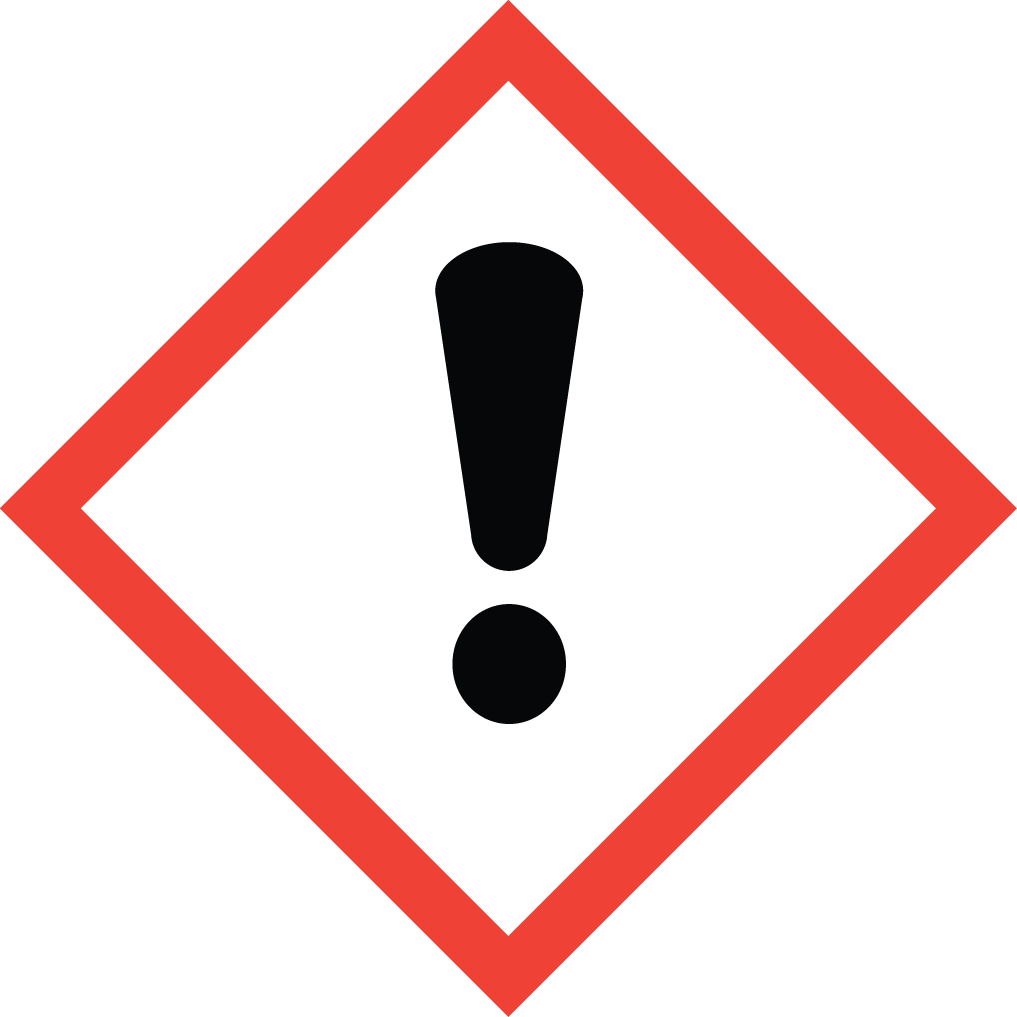
- H226Flammable liquid and vapor.
- H315Causes skin irritation.
- H319Causes serious eye irritation.
- H335May cause respiratory irritation.
- P210Keep away from heat/sparks/open flames/hot surfaces. — No smoking.
- P233Keep container tightly closed.
- P240Ground/bond container and receiving equipment.
- P241Use explosion-proof electrical/ventilating/lighting/.../equipment.
- P242Use only non-sparking tools.
- P243Take precautionary measures against static discharge.
- P261Avoid breathing dust/fume/gas/mist/vapours/spray.
- P271Use only outdoors or in a well-ventilated area.
- P280Wear protective gloves/protective clothing/eye protection/face protection.
- P303+P361+P353IF ON SKIN (or hair): Remove/Take off Immediately all contaminated clothing. Rinse SKIN with water/shower.
- P304+P340IF INHALED: Remove victim to fresh air and Keep at rest in a position comfortable for breathing.
- P305+P351+P338IF IN EYES: Rinse cautiously with water for several minutes. Remove contact lenses, if present and easy to do. Continue rinsing.
- P312Call a POISON CENTER or doctor/physician if you feel unwell.
- P362Take off contaminated clothing and wash before reuse.
- P370+P378In case of fire: Use ... for extinction.
- P403+P233Store in a well-ventilated place. Keep container tightly closed.