

Titanium (IV) Ethoxide
Properties
- We can offer items in bulk or custom. For other quantities or purities, please request a quotation.
- All prices are subject to change.
Information about Titanium (IV) Ethoxide / CAS 3087-36-3
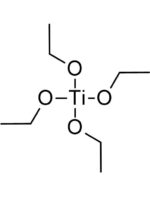
Titanium (IV) Ethoxide is a pale yellow to colorless liquid alkoxide that readily hydrolyzes to form Titanium dioxide and ethanol, similar to other Titanium and Zirconium alkoxides. Its strong reactivity with water makes it useful in sol-gel processing as well as vapor-phase techniques such as chemical vapor deposition (CVD) and atomic layer deposition (ALD). It can also serve as a precursor for other Titanium alkoxides, including Titanium Methoxide and mixed alkoxide systems.
In related research, Bommel and Bernards at Philips Research Laboratories investigated Titanium (IV) Oxide coatings prepared by spin-coating titanium ethoxide solutions, focusing on low-temperature curing below 150 °C. They found that hydrolysis behavior strongly depends on solution pH, and by controlling pH and curing conditions, they produced Titanium Oxide films suitable for anti-reflection interference applications.
Similarly, researchers from the University of Tartu and the University of Helsinki studied Titanium dioxide thin films grown by atomic layer deposition to achieve precise and reproducible thickness control. While titanium tetrachloride is commonly used for ALD, its corrosive nature and release of hydrochloric acid can damage equipment and affect film quality. Titanium ethoxide, although slower in growth rate, was optimized through substrate temperature and dosing conditions to produce high-quality films.
- van Bommel, M. J., & Bernards, T. N. M. (1997). Spin coating of titanium ethoxide solutions. Journal of Sol-Gel Science and Technology 1997 8:1, 8(1), 459–463. https://doi.org/10.1007/BF02436882
- Aarik, J., Aidla, A., Sammelselg, V., Uustare, T., Ritala, M., & Leskelä, M. (2000). Characterization of titanium dioxide atomic layer growth from titanium ethoxide and water. Thin Solid Films, 370(1–2), 163–172. https://doi.org/10.1016/S0040-6090(00)00911-1
Safety

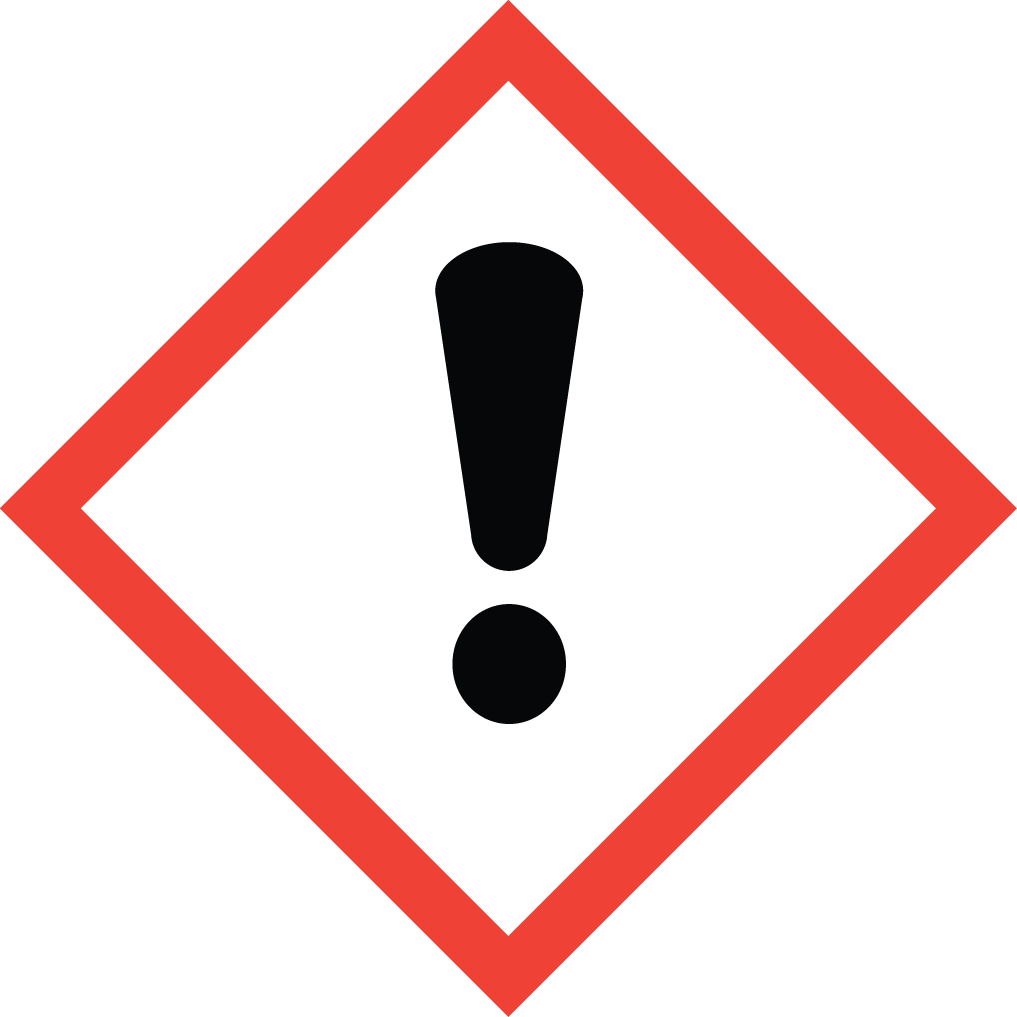
- H226Flammable liquid and vapor.
- H315Causes skin irritation.
- H319Causes serious eye irritation.
- H335May cause respiratory irritation.
- P210Keep away from heat/sparks/open flames/hot surfaces. — No smoking.
- P233Keep container tightly closed.
- P240Ground/bond container and receiving equipment.
- P241Use explosion-proof electrical/ventilating/lighting/.../equipment.
- P242Use only non-sparking tools.
- P243Take precautionary measures against static discharge.
- P261Avoid breathing dust/fume/gas/mist/vapours/spray.
- P271Use only outdoors or in a well-ventilated area.
- P280Wear protective gloves/protective clothing/eye protection/face protection.
- P303+P361+P353IF ON SKIN (or hair): Remove/Take off Immediately all contaminated clothing. Rinse SKIN with water/shower.
- P304+P340+P312IF INHALED: Remove victim to fresh air and keep at rest in a position comfortable for breathing. Call a POISON CENTER or doctor/physician if you feel unwell.
- P305+P351+P338IF IN EYES: Rinse cautiously with water for several minutes. Remove contact lenses, if present and easy to do. Continue rinsing.
- P362Take off contaminated clothing and wash before reuse.
- P370+P378In case of fire: Use ... for extinction.
Learn about this element
