

Scandium
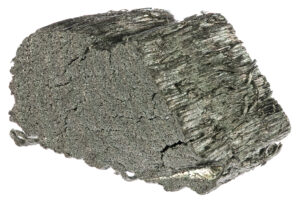
99.9% fine scandium
Element Name: Scandium
Atomic Number: 21
Atomic Mass: 44.956 g/mol
Atomic Symbol: Sc
Melting point 1541° C
Boiling Point: 2836° C
Basics:
Scandium was discovered in 1879 by Lars Frederik Nilson ten years after Mendeleev predicted that an undiscovered element had an atomic weight between Calcium and Titanium. Nilson extracted it from euxenite, a mineral known to contain multiple metal oxides. Scandium is a silvery-white looking transition metal that is relatively soft and lightweight. Only one isotope of Scandium, Sc-45, is stable and is found in nature.
Interesting Stuff:
The name Scandium stems from “Scandia,” the latin name for Scandinavia due to the fact that the minerals studied when the element was discovered were found in Scandinavia. Scandium is a relatively expensive metal due to the small deposits and limited places where it is concentrated on Earth. Traces of Scandium are believed to be responsible for the deep icy-blue color in certain aquamarine gemstones.
Sources:
Scandium is mainly found in thortveitite. However, due to thortveitite being a relatively rare mineral, it is generally obtained as a byproduct from the extraction of Uranium and other rare earths. While being abundant in Earth’s crust, Scandium is rarely concentrated into large deposits but rather found in small trace amounts. It is most commonly found as Scandium Oxide.
Uses:
Scandium is an element greatly researched due to its low density similar to that of Aluminum while having a much higher melting point. Scandium alloys were used in a wide variety of instances like in bicycle frames, baseball bats, golf club heads, and even Russian MIG fighter planes. Such items benefit from high durability thanks to Scandium’s high versatility. That allows it to improve overall strength while not adding weight. Scandium Iodide is used in metal-halide lighting to produce a pleasant sun-like light source. Such lighting is used in warehouses, megastores, and on streets. Because this light closely resembles natural sunlight, television crews also use such lamps to help cameras capture and reproduce colors when filming outdoor or night scenes. Its isotope, Scandium-46, is used in underground pipes to detect leaks and monitor different fractions in oil refining. Scandium has also recently been used in solid oxide fuel cells which convert chemical energy into electricity under high temperatures. It allows the fuel cell to be more efficient, conductive, and durable.
Works cited
Gray, T. (2009). The Elements: A Visual Exploration of Every Known Atom in the Universe. Black Dog & Leventhal Publishers.
DaQiang. (n.d.). Interesting facts about Scandium that will surprise you. https://www.aemree.com/news/interesting-facts-about-scandium.html
Scandium – Element information, properties and uses | Periodic Table. (n.d.). https://periodic-table.rsc.org/element/21/scandium
Ross, R. (2016, September 21). Facts about Scandium. Live Science. https://www.livescience.com/29071-scandium.html
PubChem. (n.d.). Scandium | SC (Element) – PubChem. PubChem. https://pubchem.ncbi.nlm.nih.gov/element/Scandium#section=Sources